
TECHNICAL GUIDE
Wet vs Dry Diamond Blade Cutting
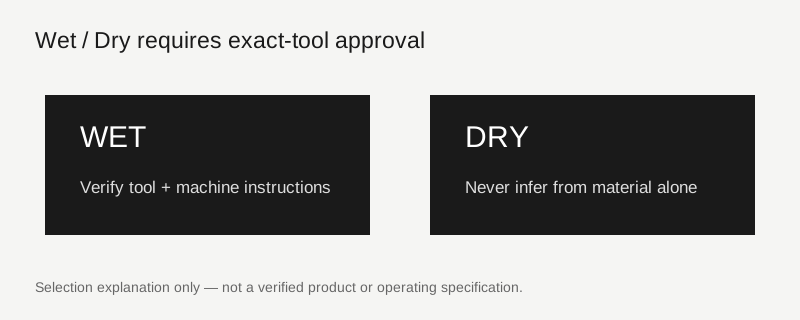
Use only the method approved for the exact blade and machine. A wet-only tool must not be selected for dry cutting; a dry reference does not establish wet-machine compatibility.
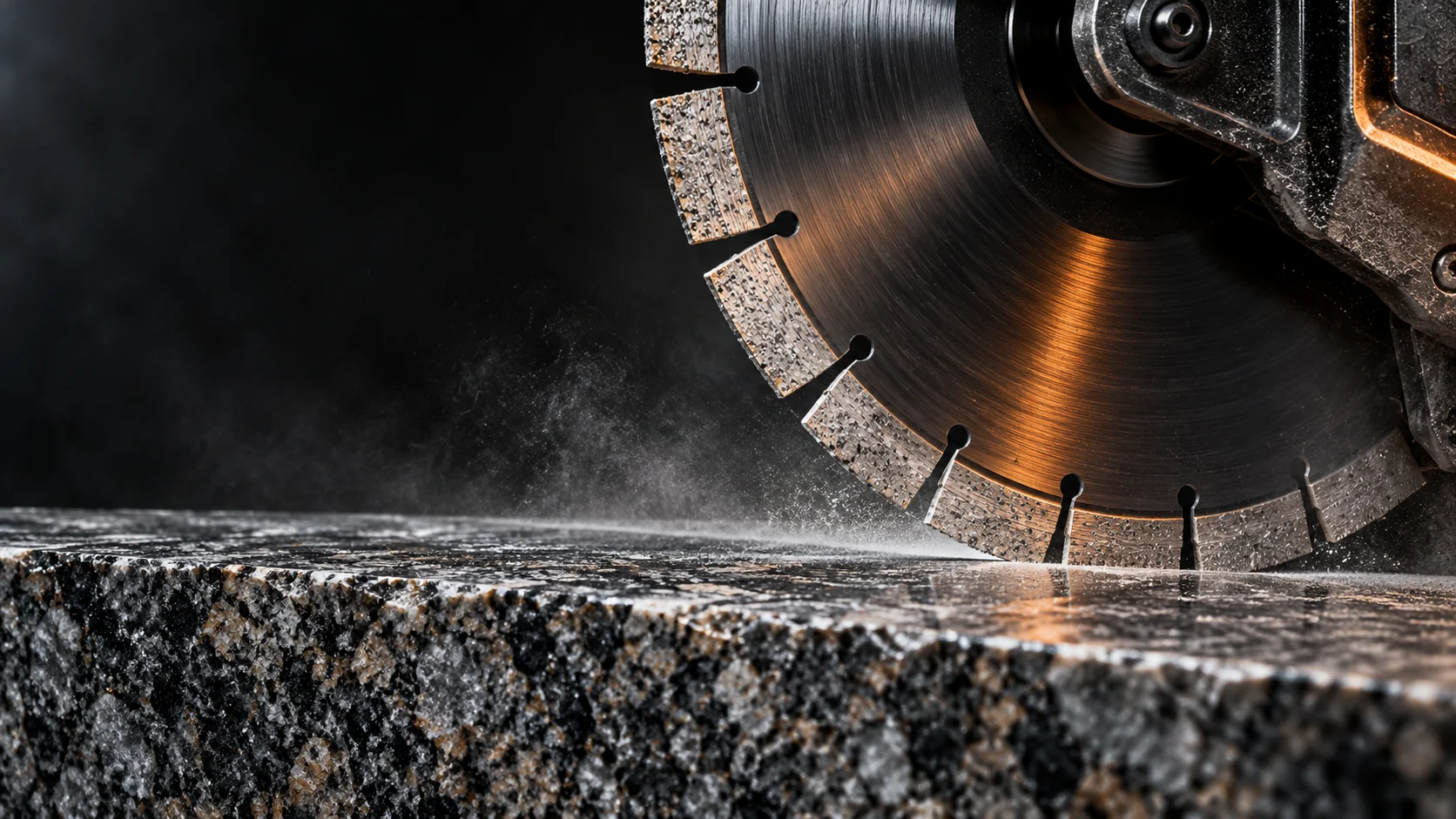
Should you choose wet or dry cutting?
Use the method approved for the exact tool and machine. A wet-only blade is not a dry-cutting option, and a dry reference does not by itself approve use with a wet machine. When the method is unknown, request confirmation rather than selecting whichever setup is most convenient.
For procurement, the decision starts with what equipment you have and what operation you need. Material, machine fit and method form one requirement. Asking only whether a blade can cut the material leaves important compatibility questions unanswered.
Conditions that govern the decision
Record the machine manufacturer and model, tool diameter and connection, intended material and operation. Describe whether the equipment provides a water system and whether its instructions permit the proposed method. Do not modify equipment based on a general selection guide.
Wet-only diamond blades require the specified wet system. Dry-cutting tools also have their own cooling and operating requirements. This guide supplies no universal water flow, cutting speed, duty cycle or RPM. Those values must come from the exact tool and equipment instructions, with any material-specific conditions reviewed together.
Cooling and dust control are related to the process but are not interchangeable approvals. Cutting and grinding stone can create respirable crystalline silica. Wet operation alone is not a statement that a workplace is compliant or exposure is adequately controlled. The operator must use the worksite procedures and controls that apply to the task.
What the current references actually support
The Quartz Diamond Saw Blade reference is wet only. The Marble Diamond Saw Blade and the 300 mm Silent Core granite reference describe wet cutting. A request for dry operation with those wet references should return Application Review Required, rather than an automatic product match.
The granite material blade, bridge-saw application blade and porcelain cutting reference do not establish a method in the current mapping. Their pages ask for confirmation. A wet saw in the selector describes the buyer’s machine category; it does not turn an unknown product method into a verified wet-cutting specification.
The vacuum-brazed drill-bit reference describes dry drilling on an angle grinder for limited materials. The cup-wheel reference lists wet/dry grinding, with tool and machine conditions still requiring review. Neither statement is a universal rule for all diamond blades or all tools sold under that family name.
Comparison
| Context | What to review | Next information |
|---|---|---|
| Wet-only reference | Wet method required | Dry input requires review |
| Dry reference | Only the listed task and equipment context | Wet input requires review |
| Wet / Dry reference | Confirm exact tool and machine conditions | Not a universal family approval |
| Unknown method | Ask for explicit confirmation | Do not infer from an illustration |
Comparison that helps an application review
Compare the approved method and equipment conditions before comparing commercial options. If both configurations are suitable, define the application and acceptance criteria for a sample review. Keep a record of the tool’s exact specification, material, machine and process conditions so an observation can be traced to the setup used.
For a distributor, include the machines commonly used by your customers and separate different tool requirements. A single catalog label such as “wet/dry” can hide different connections, size limits and tasks. For a fabricator, describe the existing setup and the reason for considering a change.
Selection logic when information is incomplete
Begin with the documented machine and tool constraints. Identify the material next, then state the process and method you intend to use. If a current tool is available, send its marking and instructions. If any essential approval is unclear, pause the automatic recommendation and ask for application review.
The Tool Selector reflects this boundary: wet-only candidates are rejected for Dry input, and the dry drilling reference is rejected for Wet input. Not Sure preserves the need for review; it is not approval to use either method. Your RFQ should carry the unresolved method question alongside the machine and size.
Common mistakes
Do not infer that a tool is dry-compatible because no water is shown in an illustration. The website’s application visuals are illustrative, not photographs documenting an approved operation. Likewise, do not assume a compatible material implies a compatible connection or machine.
Do not use a public reference table as a machine manual. Different sizes and construction options can require separate confirmation. “Wet/dry” on one grinding reference does not establish the same condition for a saw blade or drill bit.
If the current setup overheats, produces unusual wear or gives an unstable result, record the observations for qualified review. A new blade alone may not address the issue. Do not continue a suspect process solely because a tool family appeared in an online recommendation.
Recommended next step by tool type
For wet quartz or marble cutting, review the corresponding material blade page and send the exact machine, diameter and bore. For other blade families, include the intended method as a question to confirm. For drilling and grinding, use the separate tool-family pages rather than transferring blade assumptions.
Include quantity, current specification and the desired change in the RFQ. This produces a useful sourcing brief: the buyer’s actual requirement can be reviewed before a supplier configuration or commercial terms are selected.
Related Product, Material & Solution
Evidence & General Background
General selection background: Husqvarna: selecting a diamond blade. These general principles do not verify a KERZANO configuration.
Workplace context: OSHA crystalline silica information. Use the controls and procedures applicable to your worksite; a product selection page does not establish exposure compliance.
Application Review Framework
Prepare Your Application-Matched RFQ
Wet versus dry: approval is tool and machine specific
Direct answer
Wet and dry are operating approvals, not universal quality grades. Check the exact tool marking and equipment manual together; an unknown method requires review. A wet-only blade must not be chosen for dry work. Do not add a water system to equipment that is not designed for it.
Conditions and diagnostic checklist
Dust suppression, cooling and electrical suitability must be assessed separately. Silica controls depend on material, task and workplace requirements; visible water or lack of visible dust does not prove acceptable exposure. Use the applicable guidance and qualified workplace assessment.
Buying criteria and RFQ handoff
Include method, machine and tool instructions with the RFQ when compatibility is unclear. Compare performance only after those constraints are satisfied. The selector’s Not Sure input signals review, not approval for either process.
References and evidence boundaries
Prepared by KERZANO for professional sourcing and application review. General guidance is not a machine manual or a product performance test.
Community discussions identify questions, not verified product performance. Manufacturer references apply to their own tools; confirm instructions for your exact equipment.