
TECHNICAL GUIDE
How to Choose a Diamond Blade for Quartz
Identify engineered quartz or natural quartzite first, then check machine type, permitted blade diameter, bore and cooling. Use the required edge finish to frame the application review.
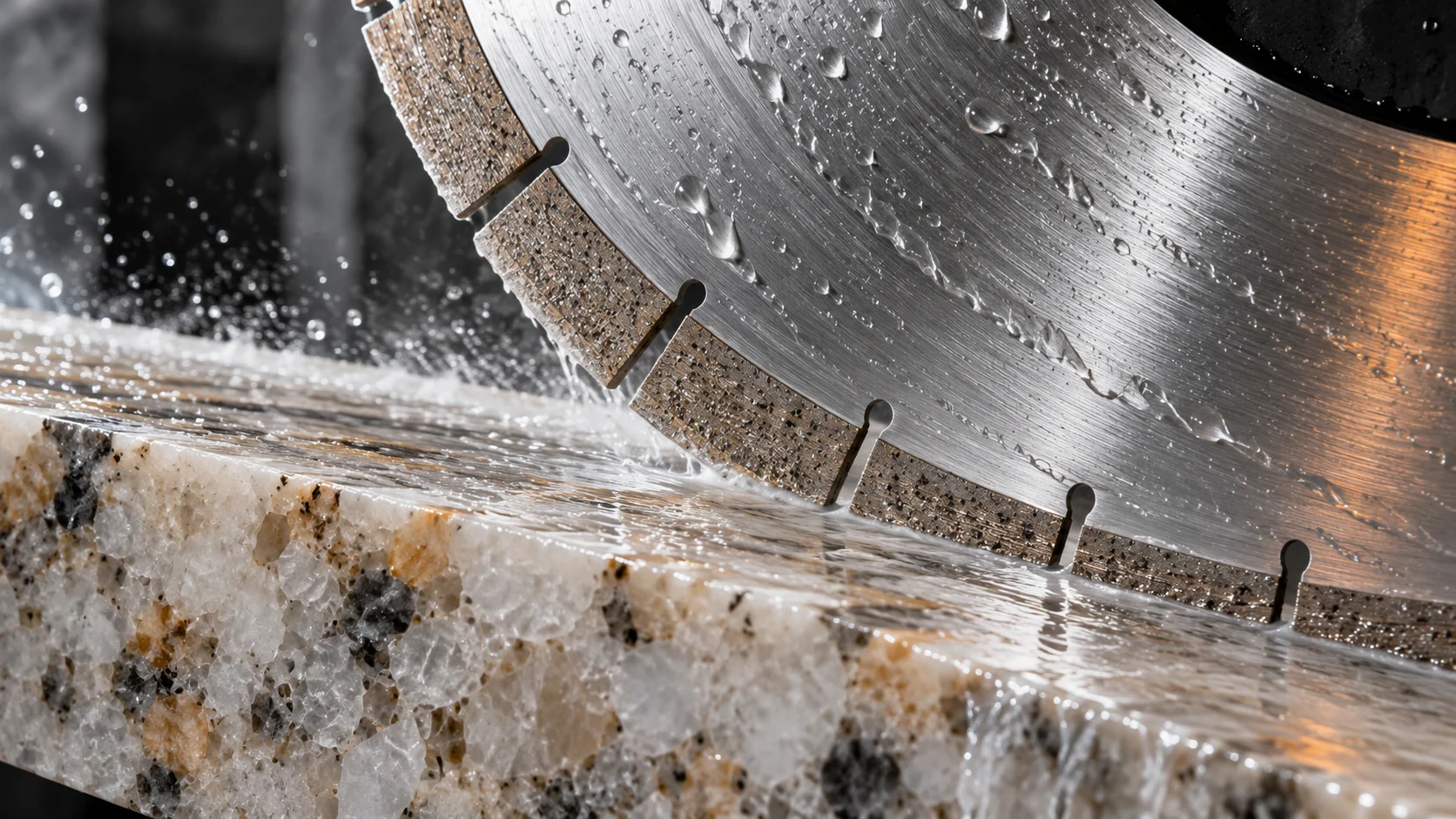
Which blade should you choose for quartz?
Identify engineered quartz or natural quartzite first, then match the machine, permitted diameter, bore and cutting method. State the required cut geometry and edge finish before requesting a configuration. The current quartz candidate is a wet-only public reference, not a universal blade for every quartz-related material or machine.
A useful commercial requirement explains what you are cutting, how you are cutting it and what result you need to assess. The product name is a starting point; it does not replace checking the actual material and equipment.
Conditions: identify the material correctly
Engineered quartz and natural quartzite are different material descriptions. The public source lists both, but that does not prove a single configuration is appropriate for every slab sold under those names. Include the slab identity or technical sheet, thickness and any relevant processing requirements supplied by the material producer.
For a distributor, identify the materials your target customers actually process. If the proposed product line serves multiple material groups, separate the requirements rather than asking for one “all stone” blade. For a fabricator, describe the specific material currently causing the selection problem.
Key factors: machine and specification matching
Provide the machine category and exact model. The current reference lists bridge saw, CNC and table-saw contexts, but the exact mounting and permitted configuration still need confirmation. The conservative selector only uses the established bridge-saw rule for the quartz cutting candidate; another machine input goes to application review.
The public reference includes 350 mm diameter, 50 / 60 mm bore, 9 / 13 mm segment-height options, 3.0 mm thickness and 24 / 25 teeth. These are listed alternatives, not proof that every combination exists. Request the final matched specification as a complete configuration before quotation.
Diameter and bore are not the entire fit check. Supply the current tool specification or marking and the machine’s relevant instructions. Do not assume an adaptor, different bore or another diameter is permitted. This guide does not authorize any modification to the tool or mounting.
Comparison
| Context | What to review | Next information |
|---|---|---|
| Quartz product | Material blade specification reference | Exact configuration before quotation |
| Quartz material | Material and process selection context | Identify the actual slab |
| Bridge-saw product | Equipment-led blade requirement | Check material and machine fit |
| Silent-core product | Granite construction reference | No automatic quartz substitution |
Method and application goals
The current quartz blade reference is wet only. A dry-cutting request cannot be automatically matched to it. If the buyer’s method is Not Sure, the next step is a method review, not an assumption that either process will work.
Clean Edge and Balanced in the selector describe buyer priorities. They are not measured KERZANO performance grades. Specify whether the edge is exposed, part of a miter or followed by another finishing operation. For a blade-life concern, describe the current wear observation and operating context without assuming that another blade has proven longer life.
Cutting or grinding silica-containing material requires workplace exposure controls. Use the applicable worksite procedures and equipment guidance; the blade reference and wet method do not establish a compliant dust-control system.
Selection logic for a qualified requirement
First, identify the slab and operation. Second, confirm the machine model and permitted dimensions. Third, establish the approved method. Fourth, describe the acceptance outcome and the current problem. Finally, provide quantity, market and any OEM requirements. This sequence gives the reviewer a concrete application brief.
For a sample comparison, keep the material identification, setup and evaluation criteria recorded. State what would make the result acceptable and who will assess it. A broad request for “fast cutting and long life” is harder to review than a description of the existing tool and the outcome that needs improvement.
Common mistakes when buying a quartz blade
Do not transfer the Silent Core Diamond Blade reference to quartz. The current separate silent-core reference is for 300 mm granite wet cutting. The quartz page’s listed silent/standard construction options must be confirmed within the quartz requirement; neither supports a measured noise-reduction claim.
Do not use conflicting public cutting-speed wording as an operating value. The source mapping records inconsistent speed statements, so the website intentionally omits them. Obtain approved operating guidance for the exact configuration rather than relying on an isolated marketing number.
Do not confuse a bridge-saw application page with a separately approved material-specific model. The bridge-saw page is organized around equipment intent and another public series size. Selecting it does not automatically confirm quartz compatibility or replace the quartz-specific review.
Recommendation by tool type
For engineered quartz cutting on a bridge saw with Clean Edge or Balanced intent, the Tool Selector can identify Quartz Diamond Saw Blade as a candidate. Review the product’s public reference table, then send the machine, diameter, bore and wet-cutting requirement for confirmation.
For quartz grinding, begin with the Diamond Cup Wheel family and specify the removal task, required finish and connection. Drilling, a different cutting machine or an unsupported method should go directly to Application Review Required. Keep the exact operation in the RFQ so the supplier discussion follows buyer demand rather than a presumed catalog model.
Related Product, Material & Solution
Evidence & General Background
General selection background: Husqvarna: selecting a diamond blade. These general principles do not verify a KERZANO configuration.
Workplace context: OSHA crystalline silica information. Use the controls and procedures applicable to your worksite; a product selection page does not establish exposure compliance.
Application Review Framework
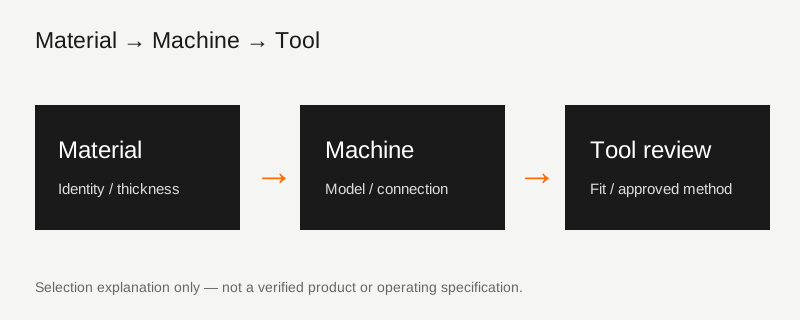
Prepare Your Application-Matched RFQ
Quartz cutting: material identity before blade selection
Direct answer
Engineered quartz and natural quartzite must be identified separately in a sourcing brief. Use the actual slab technical sheet, thickness and cut geometry; do not transfer an application result from one material to the other. The quartz guide owns detailed selection, while the material and product pages supply context and listed references.
Conditions and diagnostic checklist
For overheating, chipping or inconsistent edges, record the water system, machine condition, support and current blade before proposing a replacement. The listed quartz blade is a wet-only reference. Unknown machine fit or a dry process requires application review, not an automatic match.
Buying criteria and RFQ handoff
Agree the exposed-edge or miter acceptance condition and document a representative sample trial. Send the machine model, permitted diameter, bore, slab identity, method and current problem. Silica exposure needs task-specific workplace controls; wet cutting alone does not establish safe exposure or regulatory compliance.