
TECHNICAL GUIDE
How to Drill Porcelain Without Cracking or Rapid Bit Wear
Identify ceramic or hard porcelain before choosing a bit, then verify its diameter, connection, depth and approved machine.
Direct answer
Direct answer
Identify ceramic or hard porcelain before choosing a bit, then verify its diameter, connection, depth and approved machine. Overheating or rapid wear can reflect unsuitable tooling, cooling, pressure or operating conditions; it does not establish a material identity. Use the exact bit instructions. Avoid hammer action when drilling tile with a tool that requires rotary-only operation.
Conditions and diagnostic checklist
Confirm whether the selected bit is for a drill or an angle grinder; those connections and operating requirements are not interchangeable. Wet and dry drilling use tool-specific procedures. Follow approved cooling and duty requirements without inventing a universal speed, water quantity or drilling interval. Do not improvise water around an unsuitable electrical tool.
Buying criteria and RFQ handoff
Before drilling installed tile, arrange competent checks for hidden services and the wall substrate. Support and guide the work as instructed. Stop for cracking, unusual heating or unstable engagement. Record hole count, tile identity, thickness, bit condition and the stage where damage occurred; anecdotes cannot establish expected bit life.
Trial record and limitations
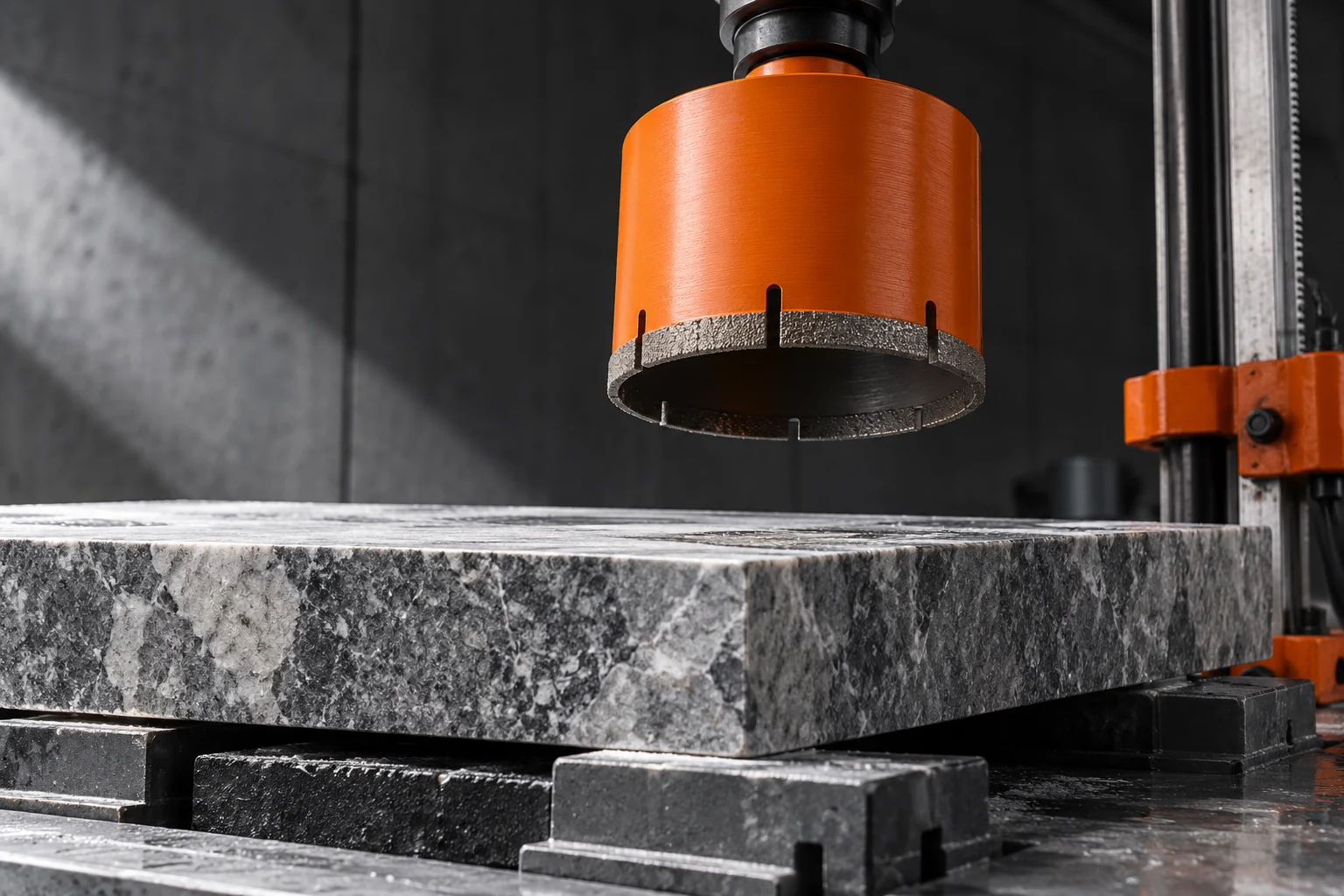
The vacuum-brazed reference is for an angle grinder and dry drilling; a normal drill requires separate review. The core-drill reference lists granite and concrete, not confirmed porcelain compatibility. Send hole diameter, required depth, machine connection, tile technical sheet, current bit and desired result in the RFQ.
Application brief
Provide material, machine model, operation, diameter, bore or connection, wet/dry method, current tool, observed issue, required result and quantity. Include target market and private-label needs where relevant. Unknown compatibility requires review before quotation.
Workplace controls
Cutting, drilling and grinding can create hazardous dust. Use task-specific controls and the machine/tool manufacturer’s instructions. Wet operation alone does not establish safe exposure. Do not improvise water around equipment that is not approved for wet use.
References and evidence boundaries
Prepared by KERZANO for professional sourcing and application review. General guidance is not a machine manual or a product performance test.
Community discussions identify questions, not verified product performance. Manufacturer references apply to their own tools; confirm instructions for your exact equipment.