
TECHNICAL GUIDE
Diamond Cup Wheel Selection: Wear and Surface Damage
Choose a cup wheel for the material and removal task, then verify machine fit, connection, permitted dimensions and approved method.
Direct answer
Direct answer
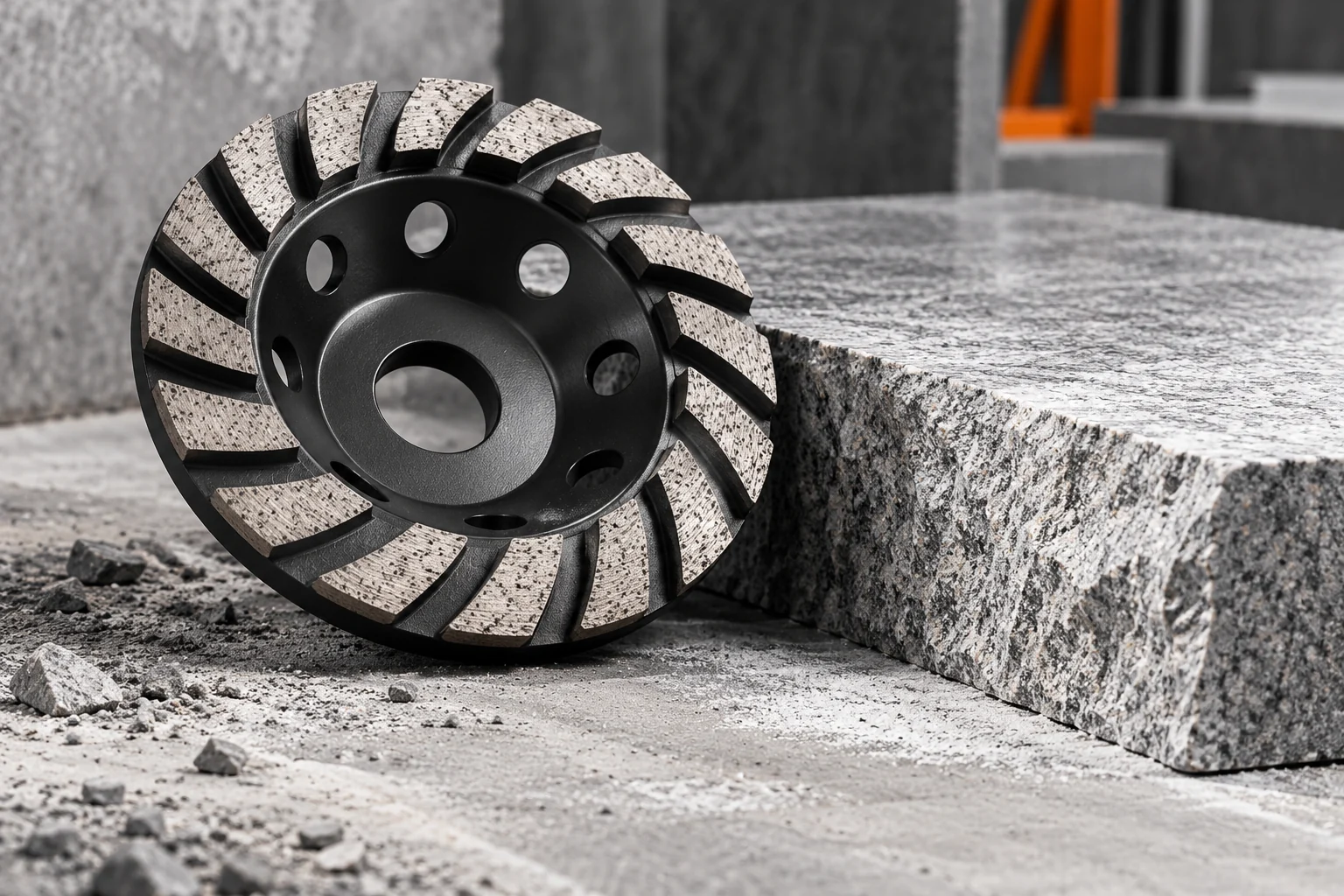
Choose a cup wheel for the material and removal task, then verify machine fit, connection, permitted dimensions and approved method. Gouging can arise from unsuitable tooling, uneven contact or the condition of the surface and machine. A grinding wheel removes material; it does not establish a finished-polish quality. Compare controlled sample results before purchasing in bulk.
Conditions and diagnostic checklist
Separate coating removal, leveling and stone surface preparation. Check the coating and substrate hazards before disturbing them. A qualified operator should inspect the wheel, machine, guard or shroud and workholding using manufacturer instructions. Do not use the tool edge as an improvised cutter or keep grinding with a damaged wheel.
Buying criteria and RFQ handoff
Evaluate a representative sacrificial area under an approved process. Record removed area or volume, time, remaining wheel condition, surface damage and subsequent finishing effort. Tool cost per accepted grinding task is more useful than a price or lifetime anecdote. Define the required flatness and finish with the buyer, not an unsupported universal threshold.
Trial record and limitations
The current wheel reference lists stone and concrete materials and wet/dry grinding, subject to tool and machine confirmation. It is not approval for every painted substrate. Send material or coating identity, grinder model, connection, removal goal, existing gouging and quantity. Review dust controls with workplace guidance; a wet/dry label is not an exposure-control approval.
Application brief
Provide material, machine model, operation, diameter, bore or connection, wet/dry method, current tool, observed issue, required result and quantity. Include target market and private-label needs where relevant. Unknown compatibility requires review before quotation.
Workplace controls
Cutting, drilling and grinding can create hazardous dust. Use task-specific controls and the machine/tool manufacturer’s instructions. Wet operation alone does not establish safe exposure. Do not improvise water around equipment that is not approved for wet use.
References and evidence boundaries
Prepared by KERZANO for professional sourcing and application review. General guidance is not a machine manual or a product performance test.
Community discussions identify questions, not verified product performance. Manufacturer references apply to their own tools; confirm instructions for your exact equipment.