
TECHNICAL GUIDE
How to Cut Porcelain Without Chipping
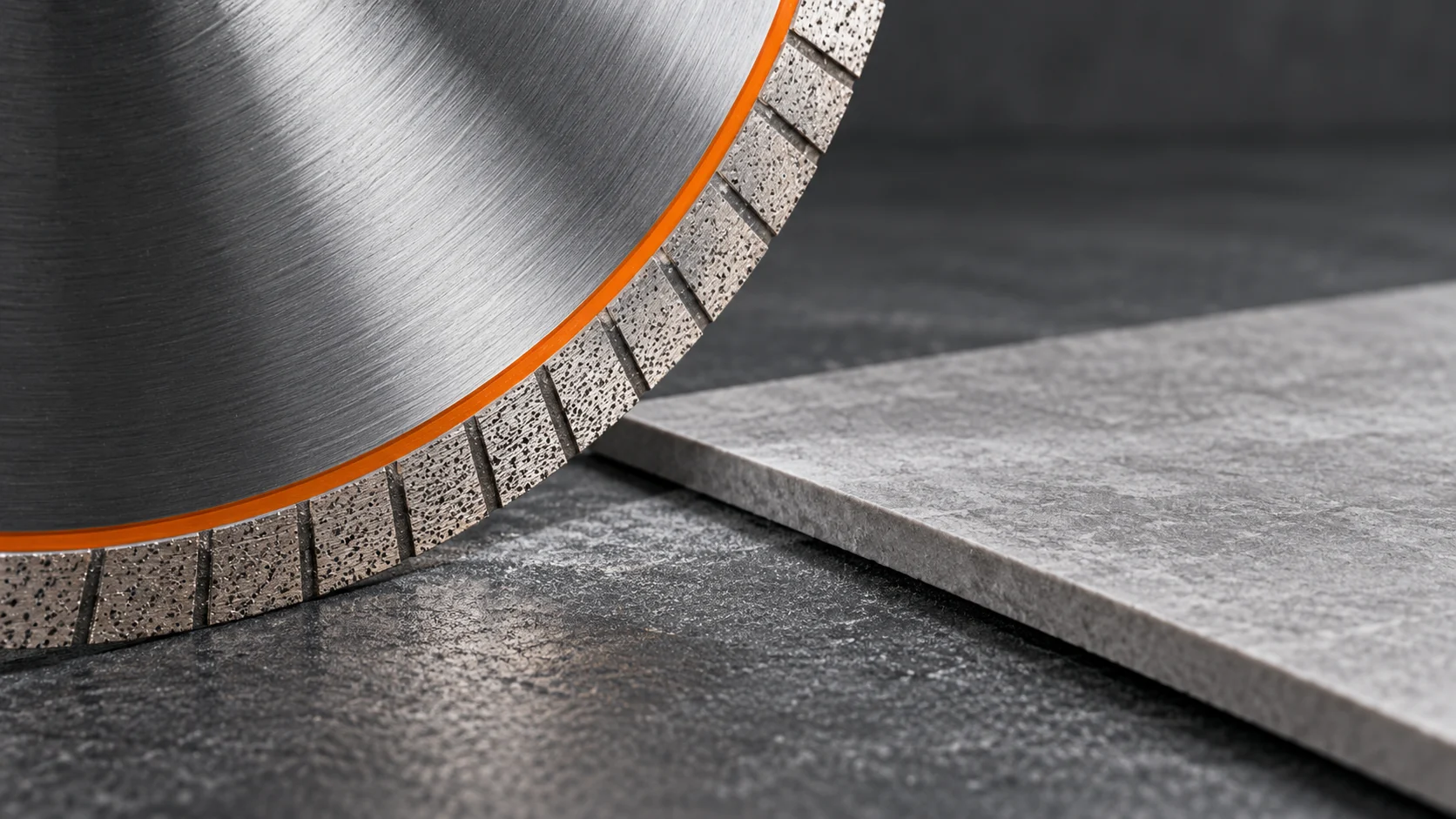
Chipping cannot be ruled out by tool choice alone. Start with a blade matched to porcelain and the machine, support the workpiece, and review tool condition and the specified cutting method.
What is the first step toward a cleaner porcelain edge?
Choose a tool that matches the actual porcelain, permitted machine size and cutting method, then review workpiece support and alignment. A blade name cannot guarantee a chip-free edge. Start by describing the edge requirement: a visible finished face, an edge hidden by a joint, and a miter joint can require different evaluation criteria.
For a buying decision, separate the tool requirement from the process problem. Record whether the chipping is at entry, exit, on one face or distributed along the cut. This description gives the application reviewer a concrete starting point instead of asking for an undefined “better blade.”
Conditions before comparing tools
Identify whether you are processing tile or a larger slab and provide the material brand or technical sheet where available. Record thickness, cut geometry, finish and the support arrangement. State whether you are making straight cuts, openings or miters; approval for one operation should not be assumed to cover the others.
Check the equipment manual for permitted diameter, arbor, guard and cutting method. Keep the machine model in the RFQ, even if its category is already selected. Two machines described as table saws can have different capacity and mounting requirements. The current porcelain reference is 400 mm with 50 / 60 mm bore; it does not establish that a smaller saw can use that configuration.
Key factors to review together
Inspect the existing blade and machine according to their instructions before comparing alternatives. Record visible damage, unusual movement or an inconsistent result for a qualified operator to assess. Do not compensate for a suspected equipment problem by inventing a new speed setting from an online guide.
Workpiece support matters throughout the intended cut, including the exit area. Describe the table or support arrangement rather than assuming the reviewer can infer it from the machine name. For a finished edge, include a close photograph and a wider photograph showing where that edge sits on the workpiece.
Confirm the exact tool’s approved wet or dry method. The present porcelain reference does not confirm a universal cutting method. A wet saw input in the selector expresses your equipment requirement; it is not evidence that every porcelain blade is approved for that setup. Follow the tool, material and machine guidance for any process adjustment.
Comparison
| Context | What to review | Next information |
|---|---|---|
| Entry edge | Describe material support and the start of the cut | Edge close-up and setup photo |
| Exit edge | Describe support at the end of the cut | Thickness and exit-edge photo |
| Along the cut | Review alignment, fit and tool condition | Machine model and current specification |
| Miter or opening | Request geometry-specific review | Drawing and required visible finish |
Selection logic for a procurement trial
First, identify the material and operation. Second, establish machine fit and the intended method. Third, define the edge acceptance requirement with a representative sample or agreed photograph. Fourth, request an application-matched specification. Only then compare sample results under documented, comparable conditions.
A useful trial record includes material identification, slab or tile thickness, machine model, tool specification, method and observations. Retain the same edge acceptance criterion when comparing candidates. Changing several conditions together makes it difficult to understand whether a tool change addressed the original problem.
Common mistakes in a porcelain RFQ
“Porcelain blade” is not enough information to determine the right diameter or connection. Do not treat the reference size as a range of stock options. If you need another size, state it explicitly and request confirmation rather than assuming a variation exists.
Do not equate a silent construction label with a measured noise result or a guaranteed cut finish. Avoid using a photograph of a clean sample edge as proof that every slab and setup will produce that result. Explain the required outcome and let the specification review identify what needs checking.
Drilling is a separate operation. A cutting recommendation does not confirm a drill-bit connection. For porcelain holes, the current vacuum-brazed reference is associated with an angle grinder and a dry-method reference; a normal drill must go through application review.
Recommendation by tool type
For a porcelain cutting requirement, begin with the Porcelain Diamond Saw Blade page and send the machine model, allowed diameter, bore, thickness and method. The deterministic selector can identify this cutting family for clean-edge intent on a wet saw or table saw, while preserving the need to confirm the exact fit.
For a miter, opening or hole-making task, state the operation separately and include the geometry or drawing. For an existing chipping problem, add current brand, model and specification so the review is about a real replacement requirement. Quantity and target market help distinguish a fabrication trial from a distributor or private-label project.
Related Product, Material & Solution
Evidence & General Background
General selection background: Husqvarna: selecting a diamond blade. These general principles do not verify a KERZANO configuration.
Application Review Framework
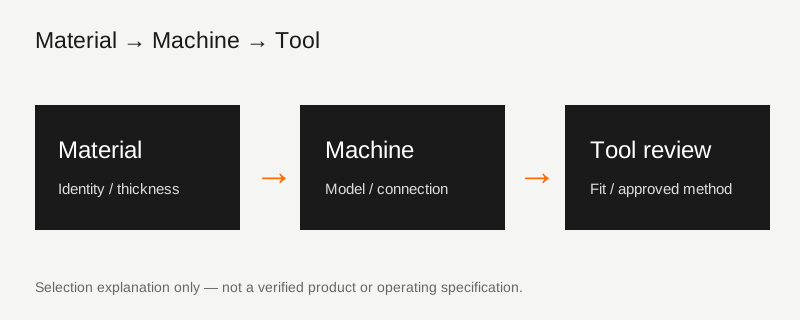
Prepare Your Application-Matched RFQ
Why does porcelain chip even on a wet saw?
Direct answer
Chipping is a symptom, not a diagnosis of a worn blade. Review the material, required visible-edge finish, blade suitability, support and machine condition together. A damaged blade needs qualified assessment; changing brands cannot correct a misaligned carriage. Do not judge remaining service life from a photograph or a community comment alone.
Conditions and diagnostic checklist
With equipment isolated according to its manual, have a competent person inspect the blade and mounting. Review approved water delivery, carriage travel and workpiece support. Record whether chips occur at entry, exit or along the whole cut, and whether the problem began with a different material batch.
Buying criteria and RFQ handoff
Agree an edge acceptance sample before comparing replacement blades. Provide tile identity, thickness, machine model, diameter, bore, current blade and photographs of the defect. Use the chipping solution for diagnosis and the porcelain product page for the specification review.